scpmkj@gmail.com
Get A Free Quote


 share
share
At present, the small-character inkjet printer is the most used fully automatic inkjet printing equipment. The basic principle of built-in pump technology is that the ink is pressurized by the pump and ejected at high speed and high pressure. The pressure is well controlled, and the ejected ink dots are stable. After deflection by the electric field, the inkjet information is obtained. Therefore, the performance of the inkjet printing equipment must be stable.
Technical advantages of built-in pump for small character inkjet printer
1. The ink circuit design is simpler, the internal components are simple in structure, and the maintenance is very convenient.
2. The ink path is completely enclosed, air cannot enter the ink path, dust will not enter and contaminate the ink, and the ink will not leak out.
3. The machine is smaller in size and more powerful in functions. Some manufacturers 'machines are more beautiful when coding barcodes.
4. Low cost and lower, the ink path is completely enclosed, and the consumables consumed are smaller.
5. Fully automatic cleaning and maintenance.
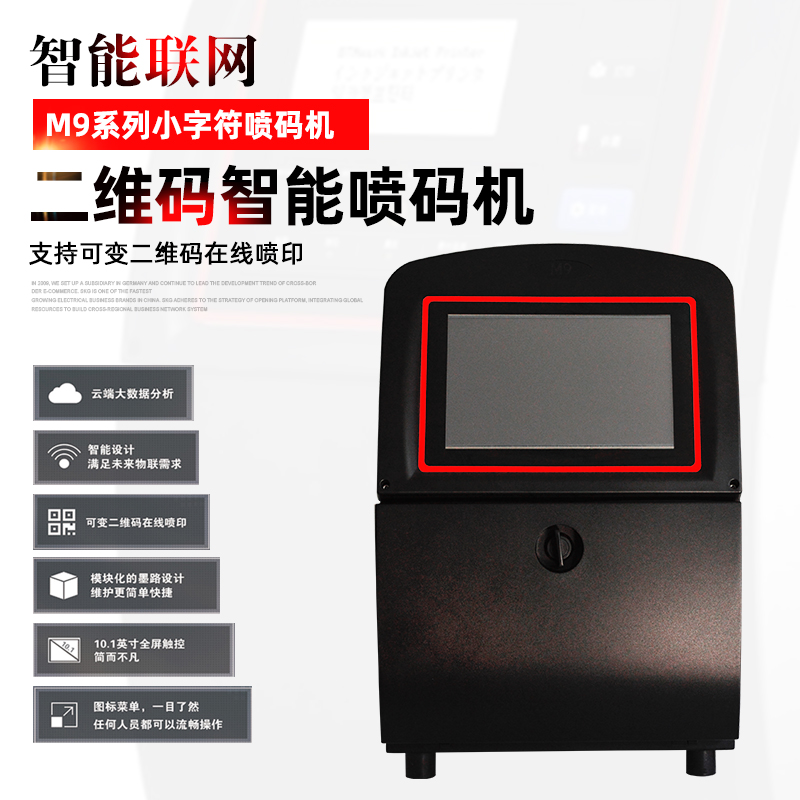
The viscosity of the ink used in the inkjet printer will change with the change of ambient temperature. The impact of changes in environmental temperature and humidity on the inkjet printer is mainly on the impact of ink and inkjet printing effect. The ink becomes lower, the ink mobility decreases, and the viscosity increases. As the temperature rises, the fluidity increases and the viscosity decreases. Therefore, it is very important to ensure the constant temperature of the inkjet printer! There are two ways to heat the printer to keep the printer constant temperature.
There are two ways to heat the inkjet printer: first, overall heating; second, local heating.
Overall heating. Many brands of inkjet printers are designed to use the heat emitted by parts in the printer to heat the entire ink box, and the temperature of the ink box rises to ensure the ink temperature. The heat generated by the modules during the operation of the inkjet printer (gear pump, low-voltage power supply, high-voltage package, and motherboard are all heating modules) causes the temperature in the entire chassis to rise, and the ink in the ink box will rise accordingly. During long-term operation, the ink in the ink box can maintain a constant temperature. In addition, another shortcoming of overall heating is that due to the poor heat dissipation effect of the inkjet printer, the temperature of the chassis rises in summer, and the heat remains in the chassis, and the temperature will become very high, which will easily burn out components of the inkjet printer.
Localized heating. Local heating is to heat some components on the nozzle. During operation, the ink of the inkjet printer passes through the nozzle conduit to the nozzle, passes through the charging electrode and the deflection plate, and the ink droplets are deflected in the electric field formed by the high-pressure deflection plate, and then ejected from the nozzle to form the text to be printed. If this process ensures that the temperature of the nozzle is constant, the ink flowing through the nozzle can also remain constant. It is much more used in high-resolution inkjet printers, that is, high-precision inkjet printers. Local heating keeps the ink viscosity within a suitable range, ensuring a constant and good inkjet printing effect.