scpmkj@gmail.com
Get A Free Quote
 share
share
1. What types of inks are there for ink printer?
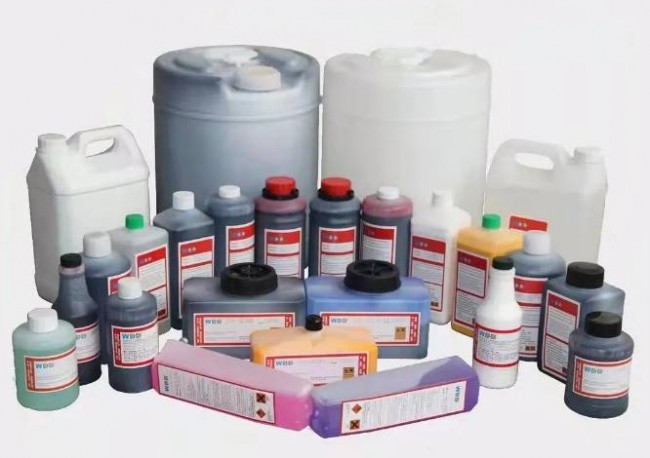
Inkjet printer inks are commonly used in ink printers. Different inkjet printers have their own ink models and classification methods. Different types of inks also have differences in physical chemistry and other technical parameters. Therefore, different brands of inkjet printers cannot replace each other. The types of inkjet printer inks are:
1. Water-based inks
It is formulated from water-based resin, can be soluble in water and can be diluted with water. It is characterized by stable ink, bright colors, no need for organic solvents, can reduce solvent evaporation, can prevent air pollution, does not affect human health, and is not easy to burn. It is an environmentally friendly ink. Water-based inks are mostly used in the food, pharmaceutical, beverage, packaging and printing industries.
2. Oily ink
Also known as solvent-based inks, they refer to inks that are not easily soluble in water but soluble in organic solvents. Oily inks can be sprayed on both absorbing and non-absorbing surfaces. They are not easy to color after spraying. They are characterized by high ink viscosity, fast, water-resistant, soft, and light-resistant. When used, the ink is more economical and effectively saves costs. Oily inks are mostly used for metals and plastics. Surfaces made of wood, aluminum foil, cartons and building materials.
3. Ultraviolet curable ink
It is an ink that uses ultraviolet light of different wavelengths and different energies to form and dry ink under ultraviolet irradiation. Ultraviolet curable ink has better mechanical and chemical properties. It is characterized by no need for solvents, fast drying speed, and less energy consumption. The code printing content has good luster and firm, bright colors, water and solvent resistance, self-scratching and anti-wear resistance, and is mostly used for high-resolution and high-speed spray printing.
4. Water-based UV ink
It is a UV ink with water and ethanol as a diluent. Such water-based UV inks are more environmentally friendly. However, due to technical limitations, most water-based UV inks need to be diluted with reactive diluents. Long-term exposure affects health and causes certain pollution to the environment.
5. High temperature ink
Ordinary inks will undergo physical or chemical changes at around 100°C, while high-temperature inks are resistant to high temperatures and are not easy to fade when working in a high temperature environment. They have good gloss, acid and alkali resistance, lead and no pot, and are qualified for environmental protection certification. They are mostly used in industries that have experienced high temperatures such as glass and soldering.
How to adjust the ink viscosity of the inkjet printer
Regardless of which ink it matters, if the ink viscosity is too high or insufficient during use, it will affect the quality of the inkjet printer. So how to adjust the viscosity of the inkjet printer ink?
1. The ink viscosity is too high
Excessive ink viscosity in the inkjet printer will cause ink to stick in the ink pipe, resulting in insufficient ink supply, insufficient ink jet volume, and color fragmentation. This phenomenon is even more prominent when working in winter or low temperature environments.
To solve such problems, you can increase the indoor temperature to reduce the viscosity of the ink, or use lower viscosity inks.
2. The ink viscosity is too low
If the ink viscosity is too low, the ink will be too diluted and the ink jet speed will be fast. The ink will be reflected back to the nozzle when sprayed on the substrate, causing the ink to accumulate on the nozzle, causing the nozzle to be blocked. This may occur when spraying the same color for a long time.