scpmkj@gmail.com
Get A Free Quote
 share
share
Old friends who follow us should already have some understanding of DM codes, QR codes and their uses in different industries. In addition, there are many other types of QR codes, each with its own unique application areas and limitations.
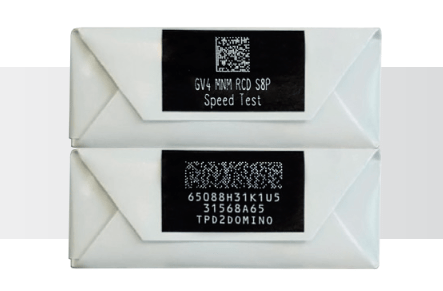
Today, we will explore a lesser-known 2D barcode symbol-DotCode, a relatively new member of the 2D code field that was developed for very specific high-throughput applications.
DotCode
DotCode is a two-dimensional barcode that encodes data in points in a rectangular array.
In high-speed production industries, DotCode can be used as an alternative to other QR codes to promote item-level serialization, allowing product tracking in global supply chains.
DotCode was developed by Dr. Andrew Longacre and was published by AIM, a global industry standards organization, in 2009.
DotCodes are public domain codes, which means they are not subject to copyright and have no royalties, so organizations of various types do not need authorization to print or use them.
° Like other QR codes, DotCode has error correction capabilities using the Reed-Solomon correction algorithm, which can be used to detect and recover missing data in QR codes. This means that if part of the code is lost or damaged, the DotCode can still be read.
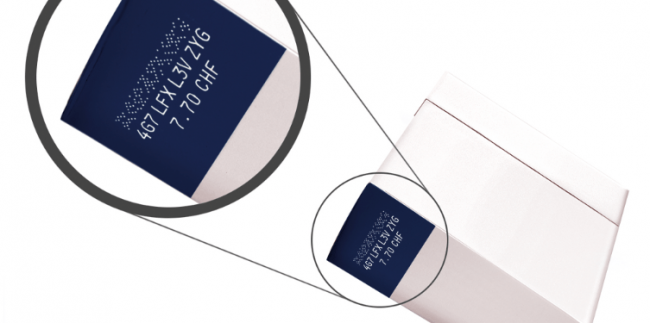
What does DotCode look like?
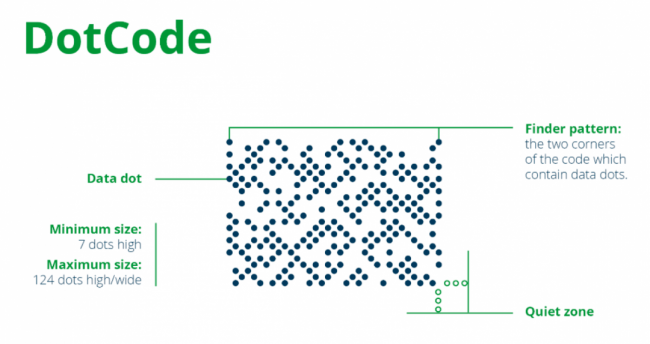
Unlike many other QR codes, DotCodes are usually rectangular. Data in DotCode is encoded as "data points". The data points can be squares or circles and are located on the diagonal of the rectangle's grid.
The size and direction of the DotCode are very flexible, but the sum of the points in the height and width of the code must be odd.
DotCode can be printed in dark on a light background or in light on a dark background, as long as there is enough contrast to ensure readability.
The minimum size of DotCode is 7 dots high. In theory, there is no maximum size, but the practical limit that most printing technologies can achieve is 124 dots in any direction.
Like other QR codes, DotCode also has a "finder pattern" that can be seen at both corners of the code containing data points-the locations of these points allow a data reader or scanner to know where to start reading the data.
When the DotCode is printed, it must be surrounded by a "static area" three dots wide. This blank area ensures that the scanner can effectively scan and read the code without identifying any additional printed content.
What data can DotCode contain?
DotCode can encode data using all 7-bit ASCII (American Standard Code for Information Interchange) characters, as well as all extended 8-bit ASCII characters-representing the numbers 0 to 9, the lower case letters a to z, the upper case letters A to Z, punctuation, and a series of special characters.
Unlike other QR codes, DotCode is not technically limited to any functional capacity related to data capacity. The amount of data stored in DotCode does not have a basic maximum capacity.
The ideal choice for assigning codes to DotCode?
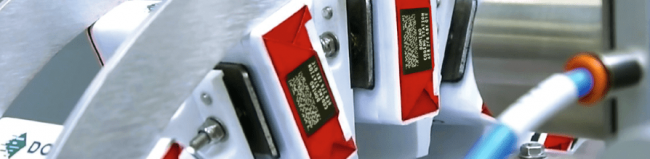
Unlike other QR codes, DotCode does not require the use of continuous production lines or precise spatial spacing, so it can be reliably applied to high-speed inkjet printers, including inkjet printers and laser marking systems. This makes this type of code very suitable for use in industries with high-speed production lines.
How to scan DotCode?

Like DM codes and QR codes, DotCode can be scanned from any direction using a professional 2D barcode scanner or camera scanner. If you have a suitable barcode reading app installed, you can also use the camera on your smartphone or tablet to scan DotCode. However, the use of DotCode in consumer-facing applications is generally not recommended.
What industries is DotCode suitable for?
The use of DotCode has already achieved great success in packaging serialization in the European tobacco industry, where Europe's fast-paced production environments (typically up to 1000 packs per minute) require high-speed product marking solutions.
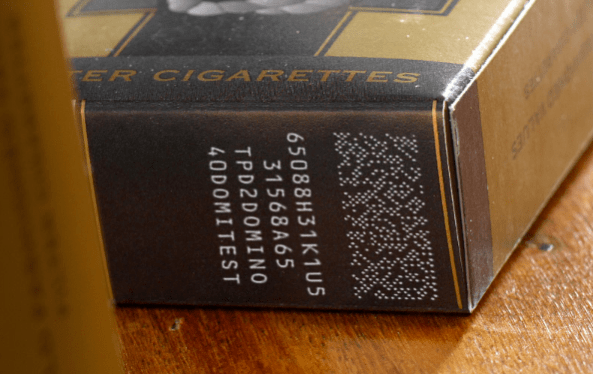
The Global Standards Organization GS1 is responsible for maintaining global standards for the use of DotCode in the tobacco industry to meet the requirements of EU Tobacco Traceability Regulation EU 2018/574.
Although DotCode's most prominent use is in the tobacco industry, its applicability in fast-paced production environments may be useful in other industries with high-speed coding requirements, such as the alcoholic beverages industry, because serialization may become a need for these industries in the future.