scpmkj@gmail.com
Get A Free Quote


 share
share
At present, the global manufacturing industry is standing at the crossroads of the transformation of old and new kinetic energy. A new round of scientific and technological revolution and the tide of industrial transformation are surging. Digital technology with artificial intelligence as the core is reconstructing the global manufacturing territory. As the only manufacturing power in the world with all industrial categories, China is moving from a "manufacturing power" to a "manufacturing power" in the deep water area. The traditional development model relying on demographic dividends and scale expansion is difficult to sustain. Labor costs rise, supply chain uncertainty intensifies, and customer demand becomes more diversified and personalized. Manufacturing enterprises must be transformed into intelligence and digitalization. Quality inspection, as the lifeline of manufacturing industry, is becoming a key barrier that cannot be bypassed on the road of transformation.
For a long time, the quality inspection link of domestic manufacturing industry is highly dependent on labor. In the industries of electronic manufacturing, automobile parts, rare earth permanent magnet, etc., workers need to screen product defects with naked eyes and experience under high-intensity operation environment, which is not only inefficient, but also easy to miss inspection and misinspection due to fatigue and subjective judgment difference, resulting in large fluctuation of product yield rate, and enterprises need to bear high rework cost and after-sales risk. In consumer electronics track, traditional manual inspection of mobile phone screens, circuit boards and other precision parts, a single production line requires dozens of quality inspection workers to work in shifts, it is still difficult to avoid micron-level scratches, solder joint defects and other missed problems. These pain points are not only a stumbling block for manufacturing companies to reduce costs and increase efficiency, but also a key bottleneck that restricts my country's manufacturing industry from shifting from "quantity catch-up" to "quality catch-up".
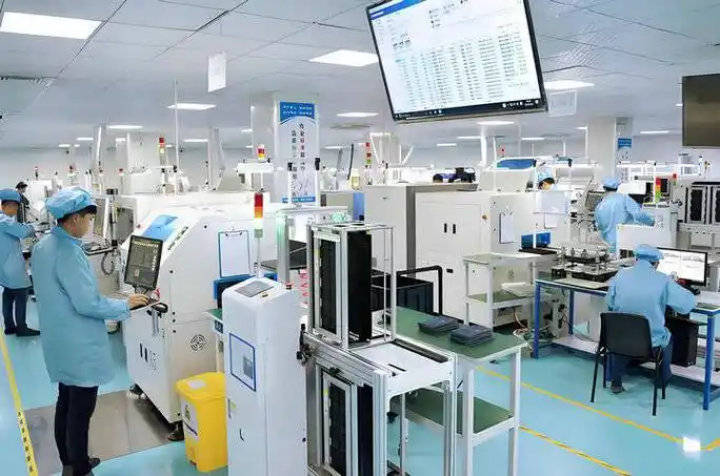
With the breakthrough of artificial intelligence technology, especially the deep integration of deep learning algorithms and industrial vision, new ideas for solving quality inspection problems have been provided. Industrial vision relies on high-precision optical equipment and smart sensors to capture full-dimensional visual data of products, and then intelligently analyzes the data through artificial intelligence's deep learning algorithm. It can achieve uninterrupted high-speed inspection in 7 x 24 hours a day and accurately identify micron levels that are difficult to capture with the naked eye. Defects, solve the shortcomings of manual quality inspection from the root cause. Compared with traditional manual quality inspection, AI industrial visual inspection can not only increase the inspection efficiency several times or even tens of times, but also achieve unified quantification of inspection standards, control the missed inspection rate to a very low level, and help enterprises stabilize product yields. Rate, significantly reduce quality control costs.
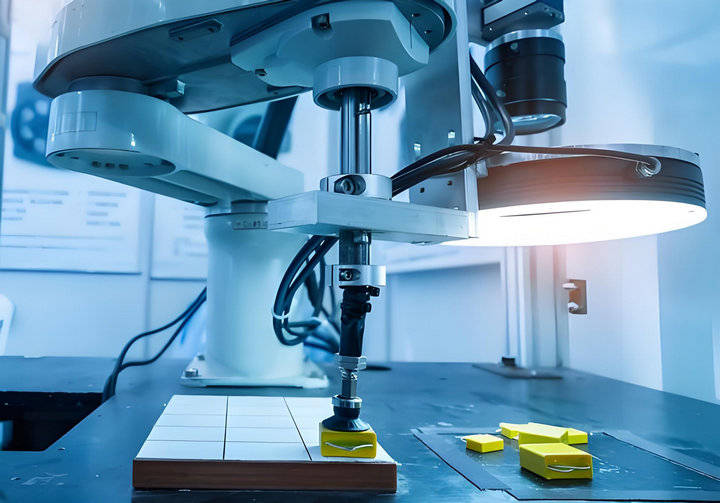
Artificial intelligence + industrial vision is not only an upgrade of Detection Tools, but also a profound change in manufacturing models. From industrial big data analysis to intelligent manufacturing system construction, AI machine vision technology is building an intelligent ecosystem covering the entire life cycle of R & D, production, quality inspection, and operation and maintenance, promoting the transformation of the manufacturing industry from scale dividends to quality dividends and data dividends. In the future, with the further popularization of artificial intelligence technology and the popularization of localized deployment, AI industrial visual inspection will no longer be the exclusive preserve of leading enterprises, and more small and medium-sized enterprises can also use this technology to complete the intelligent quality inspection process. Upgrade. In the field of AI machine vision, many technological innovation companies like Shenzhen Imaginary rely on deep learning algorithm optimization and visualization management tools to provide manufacturing companies with a large number of more efficient and more suitable AI quality inspection solutions, helping more manufacturing companies transcend the level of quality inspection transformation and head towards the new blue ocean of intelligent manufacturing.